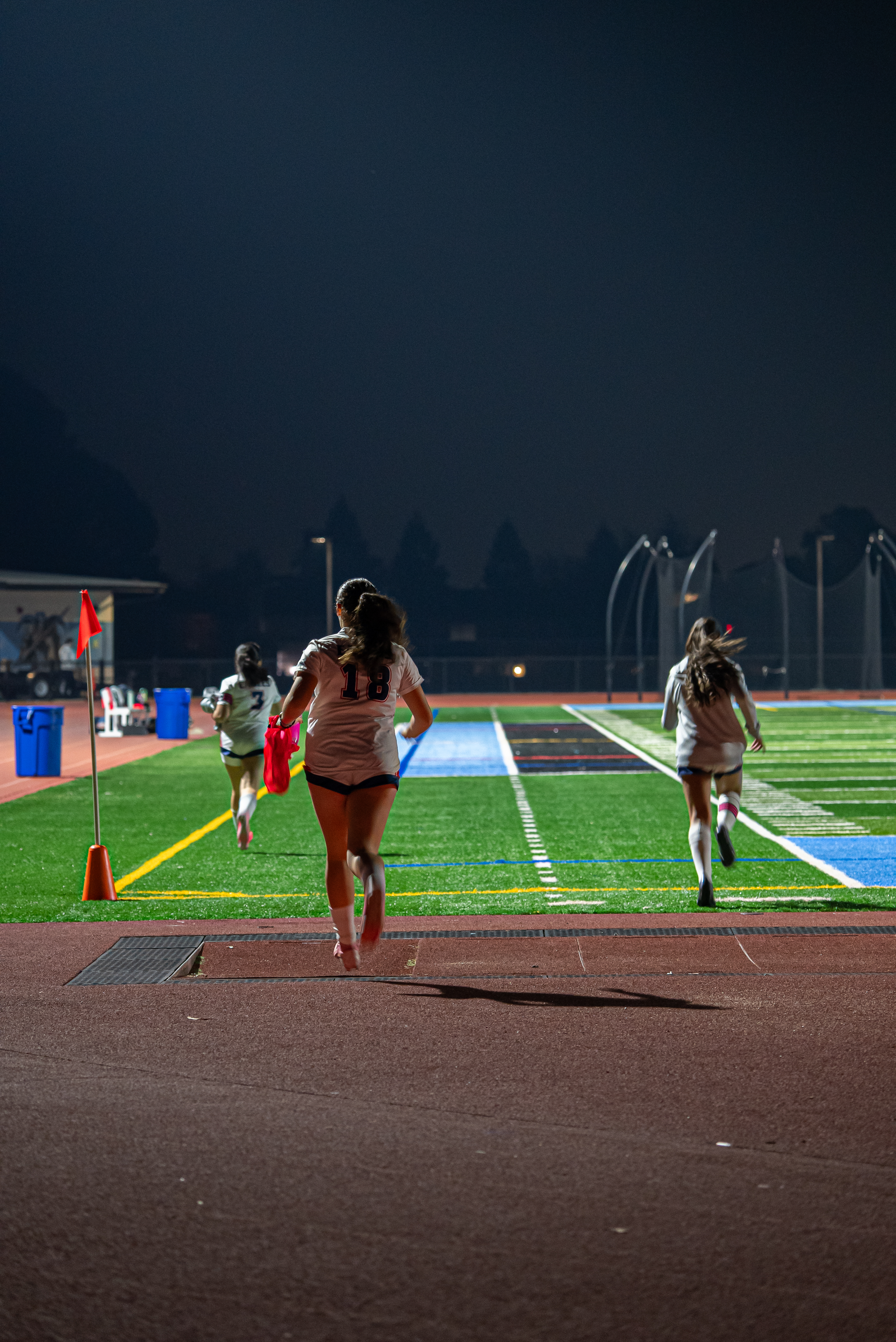
I completed my third gig, and it was a mixed bag. I’ve been leaving these gigs feeling like I could do better, and for some reason I can’t get over that feeling of failure. It’s obvious as a beginner that it’s impossible to be perfect and that I’m going to make mistakes, but man, I could be pretty hard on myself.
This gig was a high school soccer game. Sounds simple right?
It is, but there were two big question marks regarding the gig: 1) I never shot soccer before. 2) It was at night, low light conditions at a high school I’ve never been to before.
Not ideal, but you can’t get better without trying… correct?
First, let’s address the questions.
1 – Soccer
I’m not new to the sport of soccer or football. I’ve watched many games and have gone to quite a few games myself over the years. I get the sport and I understand most of what’s going on. However, shooting photography is a WHOLE new ball game.
I’ve taken my camera to every soccer event I’ve gone to (as a fan, not a hired photographer), and the first thing I can tell you is that we’re dealing with a very LARGE field of play. The closer you sit at a soccer game, the less you see. I remember buying seats close to the field for a USMNT game and then buying field level seats for a USWNT game, and while there were moments where the players were INSANELY close, there were more moments where the players seemed to be a million miles away (and looking like ants).
Shooting soccer would be tough because I’m gonna have to reach really far if they’re playing on the other side. Baseball wasn’t so bad for me. I was able to at least reach home plate from right field and vice versa, but I knew soccer would be too far to catch action, even with my longer lens.
Then there’s the action itself. Depending on the team and players, the action can be pretty unpredictable. Unlike American football where we have a good idea of where the action will take place (they’re usually heading in one direction), soccer can switch different sides in the blink of an eye. Plus, with one kick, the action can switch from different sides as well. So while you may be setting up for a potential goal in one side, you may miss the action if it flips to the other side. Fun for the viewer, not fun for a photographer.
You can kind of predict this if you know the teams. Like for the USWNT against a lower ranked team, you should expect not much action from our goalkeeper (there were times where Hope Solo never touched the ball in games) and a lot of goal scoring opportunities on the other end. For my gig, I had zero clue.
So as just a simple man with one camera, I had to somehow get great shots by being at the right place at the right time. I wasn’t this supernatural being that can somehow teleport from one side of the field to the other, following the ball wherever it went. It was my biggest concern.
2 – Night time
I’ve already experienced night time conditions at Giants games, and it’s pretty funky. The lights at Oracle Park are pretty bright, as expected from a billion dollar sports franchise, but even a well lit, professional field wasn’t immune from the idea of “night time photography.” The ISO rises, the shutter speed lowers, and you still gotta shoot as wide open as possible compared to daytime conditions.
For me, I was basically fighting a battle between shutter speed and grain. I stuck around 1/400 and 1/500 which brought my ISO up to around 10000. Not really the best shutter speed to freeze motion, but best I can do with my current equipment.
So I went to the high school and checked the field, and most of my concerns came true. The field was large. The light wasn’t too bad, but it didn’t cover the edges of the field as well. It was gonna be pretty funky.
When the game started, it started to get pretty dark, so it was all field lights from that point. My plan was to shoot every player on the team, and this required me to move around the entire field because players usually stick to a certain formation in soccer, unlike football or basketball where players can move from one side to the other.
The strategy was ok, but of course… soccer. Plenty of times the ball would be on the opposite side of the field that I was currently in, and I would miss the action shots in that area. It was pretty frustrating, especially watching the time tick away and praying the ball finds its way towards you.
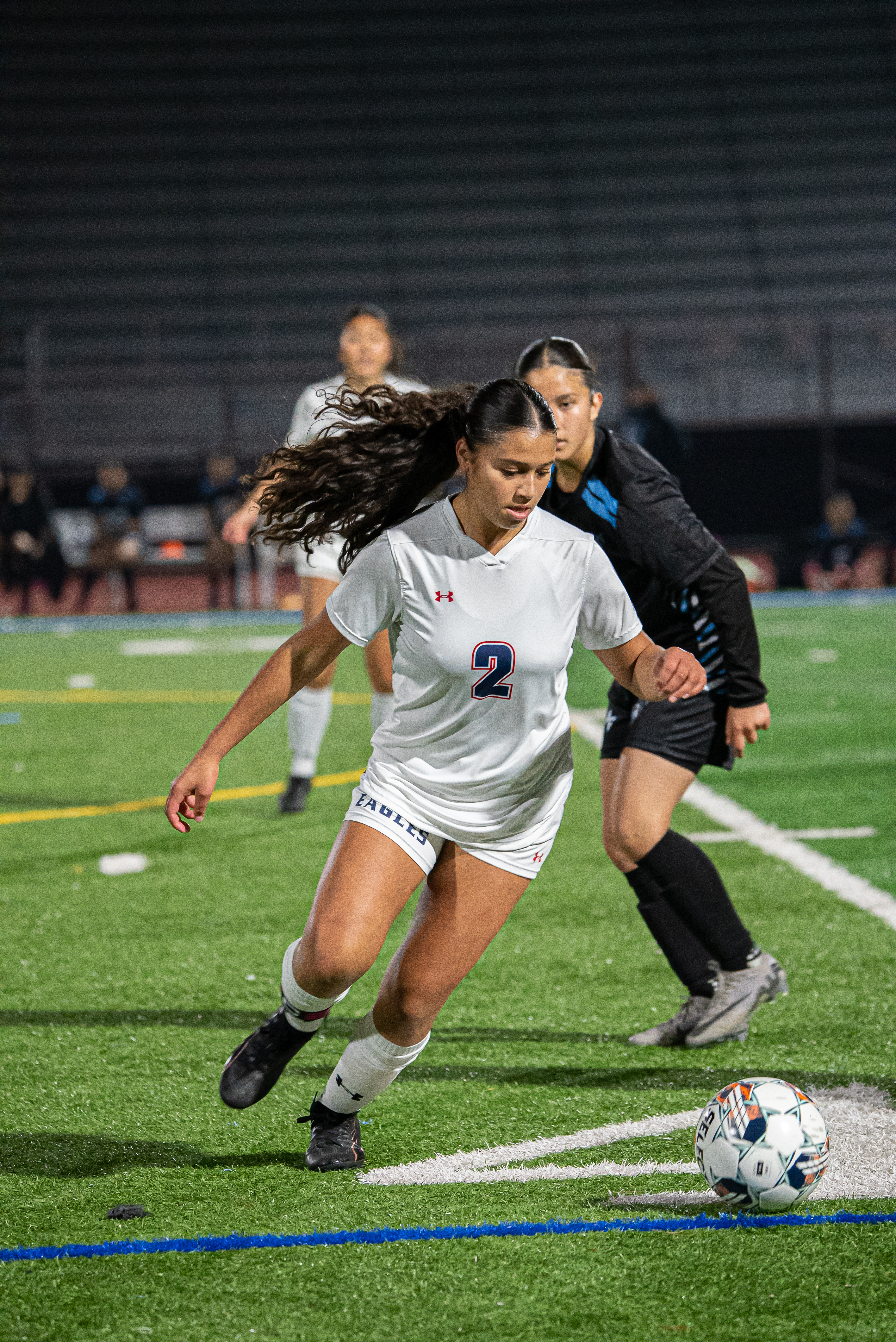
I was able to get some pretty cool images when the opportunities came. I tried to get really great action images of all the players, but of course, the opportunities were limited. Sometimes the ball never went their way, and if they did, sometimes I wasn’t at the right spot.
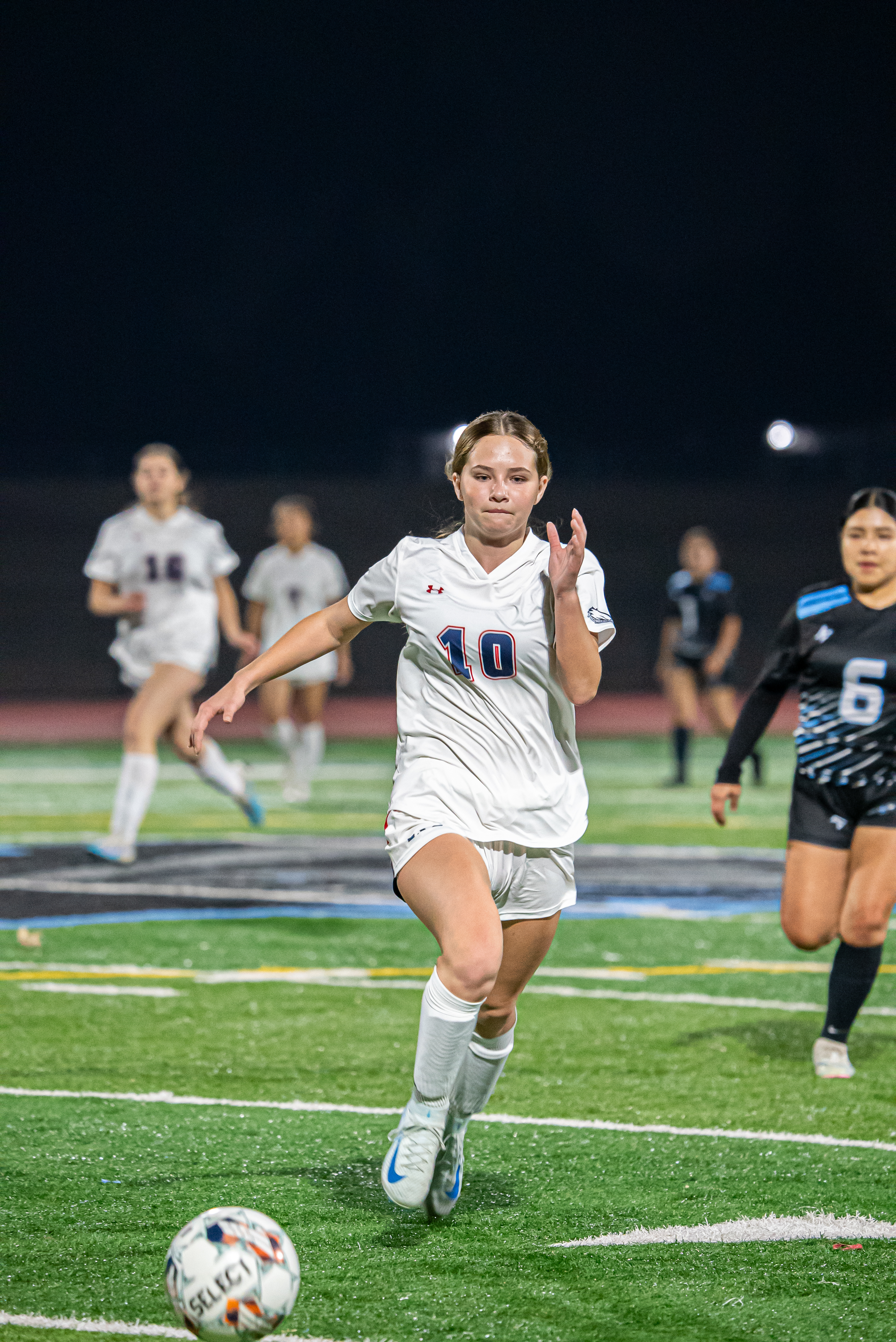
For the bad stuff, motion blur was there. Images where I had to reach really far down the field were pretty dark. I don’t think I took great photos far away.
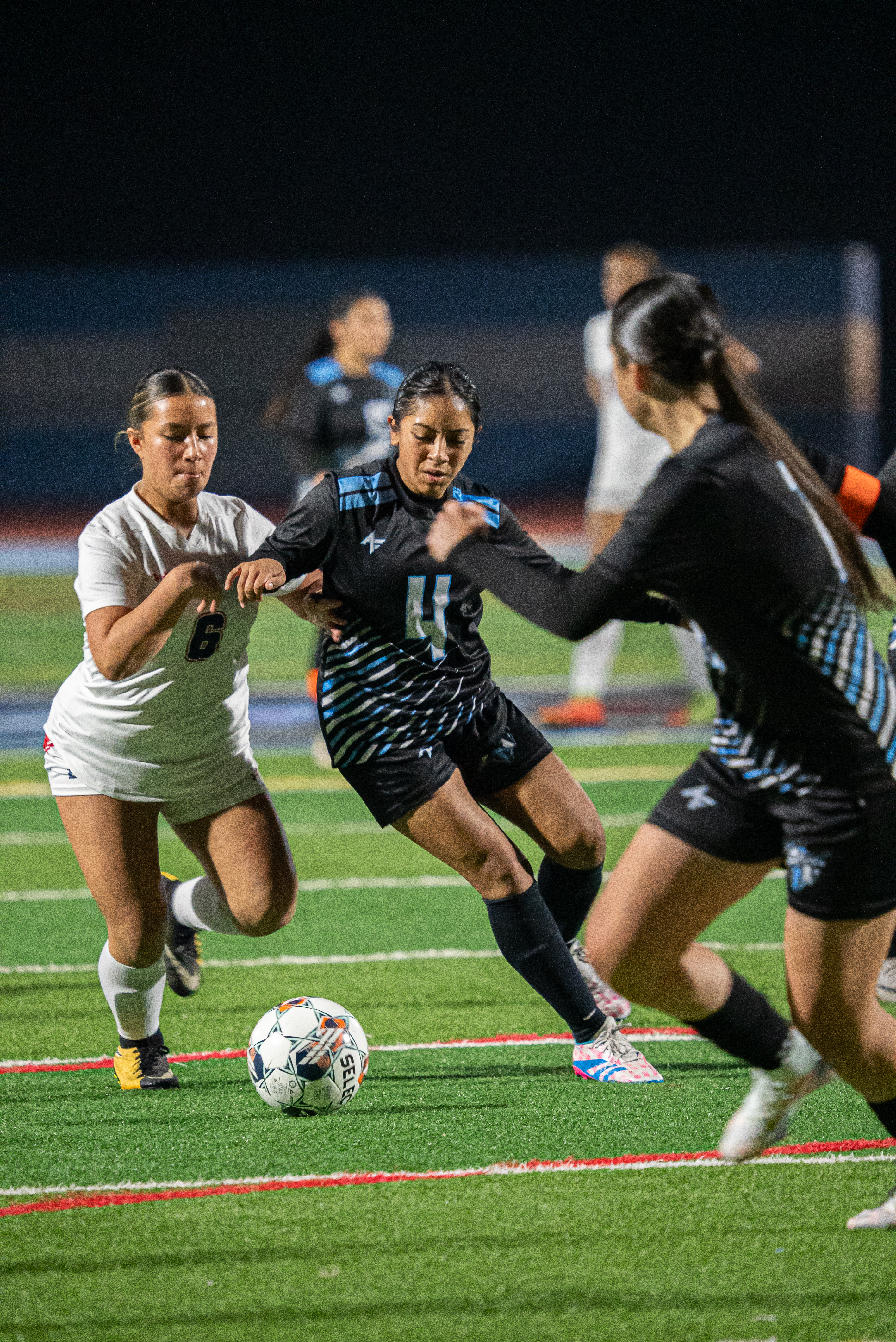
Overall, it could’ve been better. There’s shots I had in mind that never came about. I did the best that I could for my first time and as a solo job.
Lastly, the team was really awesome, and let me take some group photos before and after the game that I hope will be valuable for them. I thought they came out pretty cool.
Heading back into lightroom, the editing process was interesting. Usually for my own personal use, I just kind of do my own thing and go all over the place for my editing. However, for a client, I had to make decisions.
I chose to be as neutral as possible. Not doing too much. I didn’t wanna go crazy with the contrast and sharpness, and saturation. I didn’t want it to look too crazy. I had to keep in mind that the players are getting these photos, and we all wanna look great in our photos. I was able to fix some grain issues and help some photos here and there, but there’s stuff you can’t really fix.
In conclusion, low light is becoming too much of an enemy for me. If I were to give advice to newer photographers, investing in wide aperture lenses should be priority. There’s so many low light events that are too tricky, and it sucks worrying about it. A 70-200 mm f2.8 is now on my wishlist, and then maybe moving towards a 24-70mm f2.8 might be the move. Those lenses cost about $1000 each, so yeah. Fun.
I’m bitter but the experience is always appreciated. I learned a whole lot being out in the field and off the field. From editing to just working with clients, it’s always fun to learn. Mistakes hurt but they’re needed for growth. On to the next.