I don’t have many athletic feats in my life, but I can at least tell my imaginary kids that their dad was an accomplished marathon runner. By accomplished, I actually mean pretty bad. But what did Dominic Toretto say? Finishing is finishing. Right?
Nowadays, I’ll only agree to do 5k marathons, but there was a time in my life where I and my older sister decided to do a half marathon, and wow, looking back, I can’t believe we finished that one. Your legs basically turn into noodles the moment you decide to stop continuing that running motion that you’ve been doing for the past couple hours. That’s really what marathons are, continuing this constant running and breathing pattern from start to finish. That’s why it’s almost cruise control once everything is warmed up towards the middle of the marathon (starting the race is worst part imo).
With that said, I finished another gig. No it wasn’t actually running a marathon, it was being a photographer at a marathon. While running is obviously the hardest part of a marathon, taking photos is pretty damn tough as well. I can say that it felt like… a marathon.
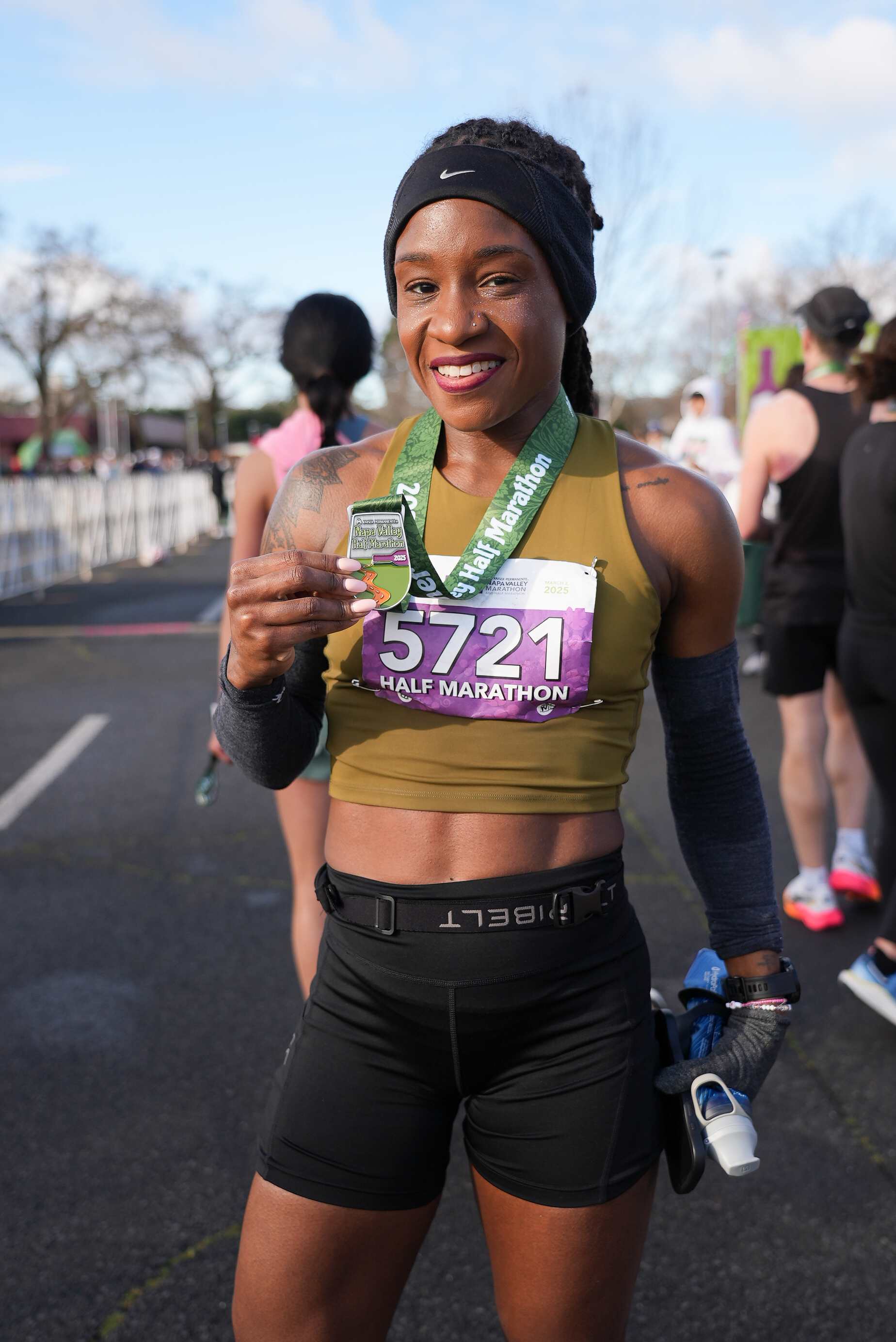
I got this gig pretty quick and the turnaround was pretty fast. I was hired to take photos of runners AFTER they finish and grab their medals. It sounds extremely simple, and it is. You don’t even need to bring a big camera to this at all. But you know how these things go, something always pops up and creates some trouble (we’ll get to this later).
First, we gotta understand the task by putting ourselves in the runner’s minds, which I have experience of. What do you want from race photos?
I’ve gotten plenty of race photos in the past; and every photo, good or bad, are memories that will stick with you forever (unless all things digital go away). But most people love photos that they can share on social media. They don’t want photos of them looking like they’re dying while running a marathon, EVEN if it does capture the real agony of running a marathon. Instead, they want a nice photo of them smiling and looking at the camera.
For my job, these runners want photos of them smiling with their medals, capturing the joy of completing such a hard task.
Easy.
But let me introduce you to the idea of natural lighting and flash.
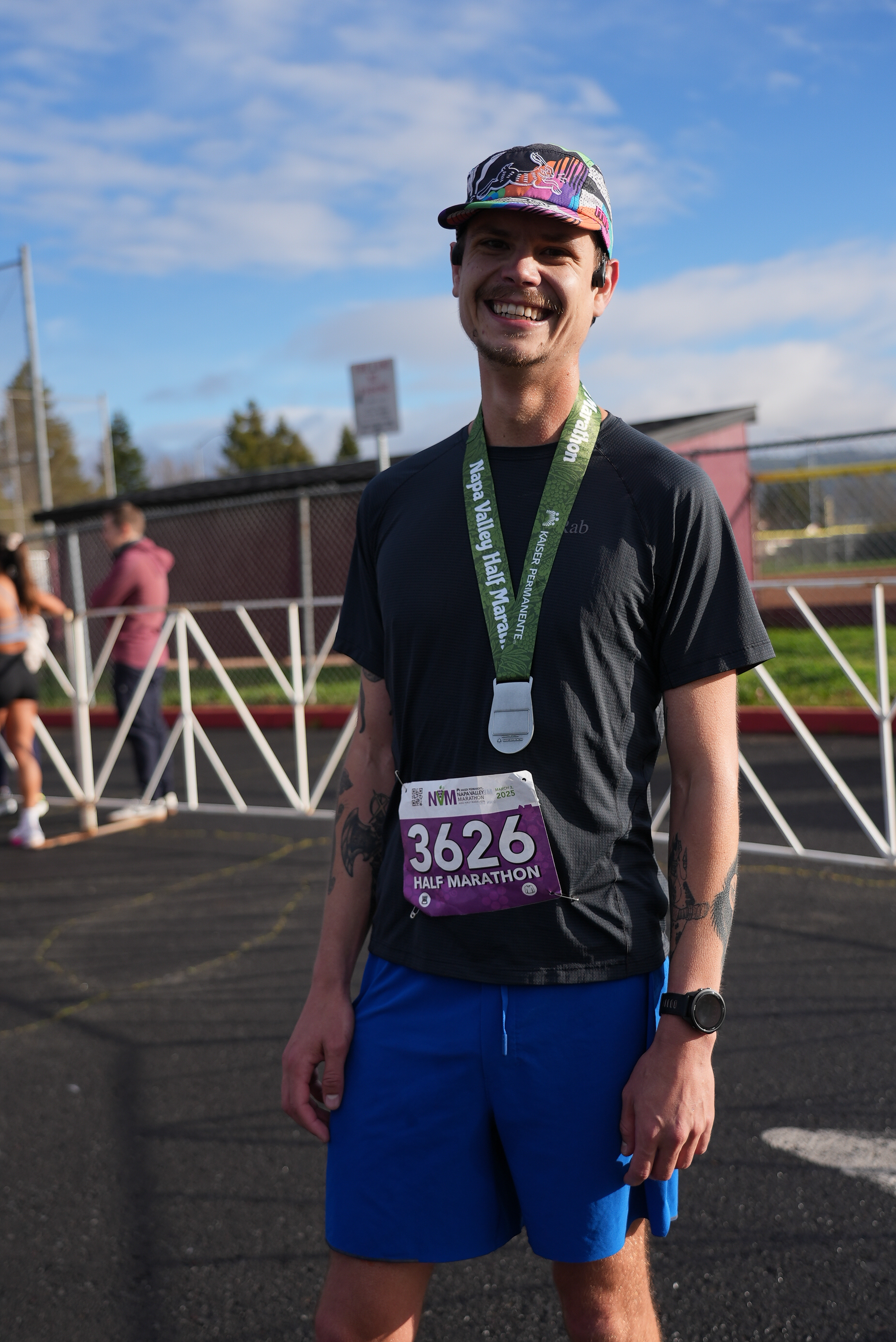
I’ll start with flash…
I made it a goal of mine to get more comfortable with flash this year. I’ll admit, flash scared me in my first year. I was scared to use it. I just didn’t know how to utilize it properly, so I steered away from it. This year, I began to use it a lot more, and I started to slowly grasp the idea of how flash can help photos.
This gig offered me the opportunity to really dig into using flash. You may ask, why bother with flash in an outdoor setting on a bright day? Well, because of “fill light.”
In natural light settings, fill light brings light to shadow areas created by the source light.
This can be seen anytime you step outside and the sun is beaming at you. Depending on the angle of the sun, there will be parts of you covered in a dark shadow. The brighter the sun, the “harsher” these dark shadows appear. Sometimes, shadows look cool. And sometimes, they’re annoying. Using flash to fill these areas with light makes these shadows less annoying.
Got it?
Lets go to the area where we’re shooting and observe our light source: the sun. I arrive there early in the morning, I look up and there are some big clouds in the sky, I guess you can say it was… partly cloudy. To everybody else, partly cloudy skies are irrelevant, but to a photographer, it’s kind of a big obstacle.
Throughout the event, the sun was showing up and then leaving, and then showing up and then leaving again. This is a problem because your settings will always change, and in a quick pace job, with marathon finishers coming at you in bunches, you have to think fast.
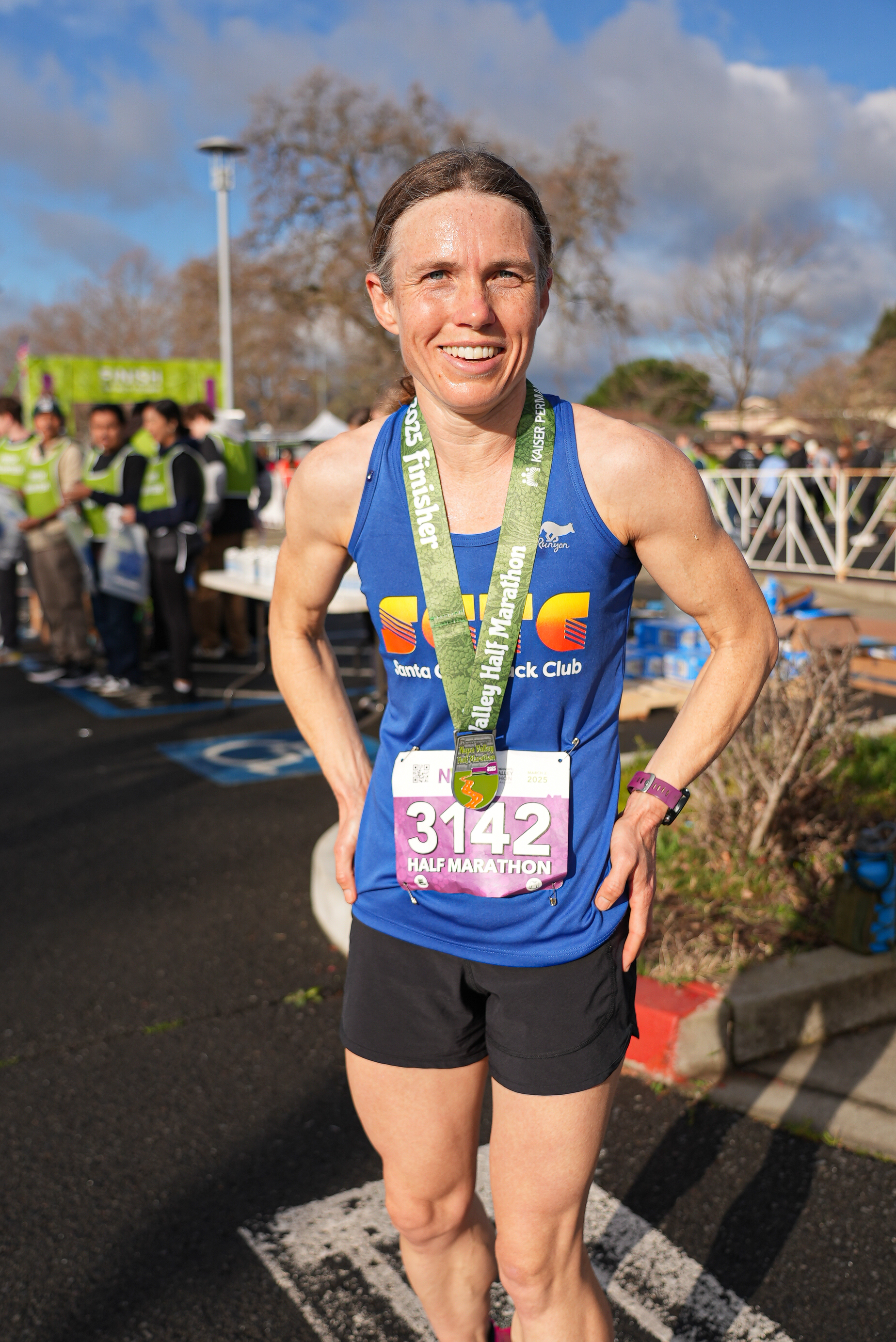
Flash kinda helps this problem. With automatic mode, the flash will measure the exact amount of flash needed to light the subject. It can adjust for different lighting environments, so whether or not the sun is behind clouds or not, the subject will be lit.
HOWEVER…
…with flash, your shutter speed is capped at 1/250. Why? because anything faster will be too quick for the flash to shoot out and bounce back into the camera. In extremely simple terms, it won’t work for anything faster than 1/250.
So whenever the sun was shining bright, I couldn’t raise up my shutter speed faster and ISO couldn’t get any lower, therefore I had to change the aperture.
Aperture? What’s the big deal? Well… subject separation makes photos really better. It’s not just the creamy blurry bokeh-look that people typically associate with “professional photography,” but subject separation from a big crowd of people and other distracting things in the background is a big deal. I think it makes the photo a lot better. So that was tricky to deal with. I personally didn’t like having to reduce subject separation to use flash. Maybe there was another way to deal with that?
Edit: I figured it out, the same ND filters i use for videos to keep the shutter speed low, I use the same for photos. Dang how did i miss that? lol
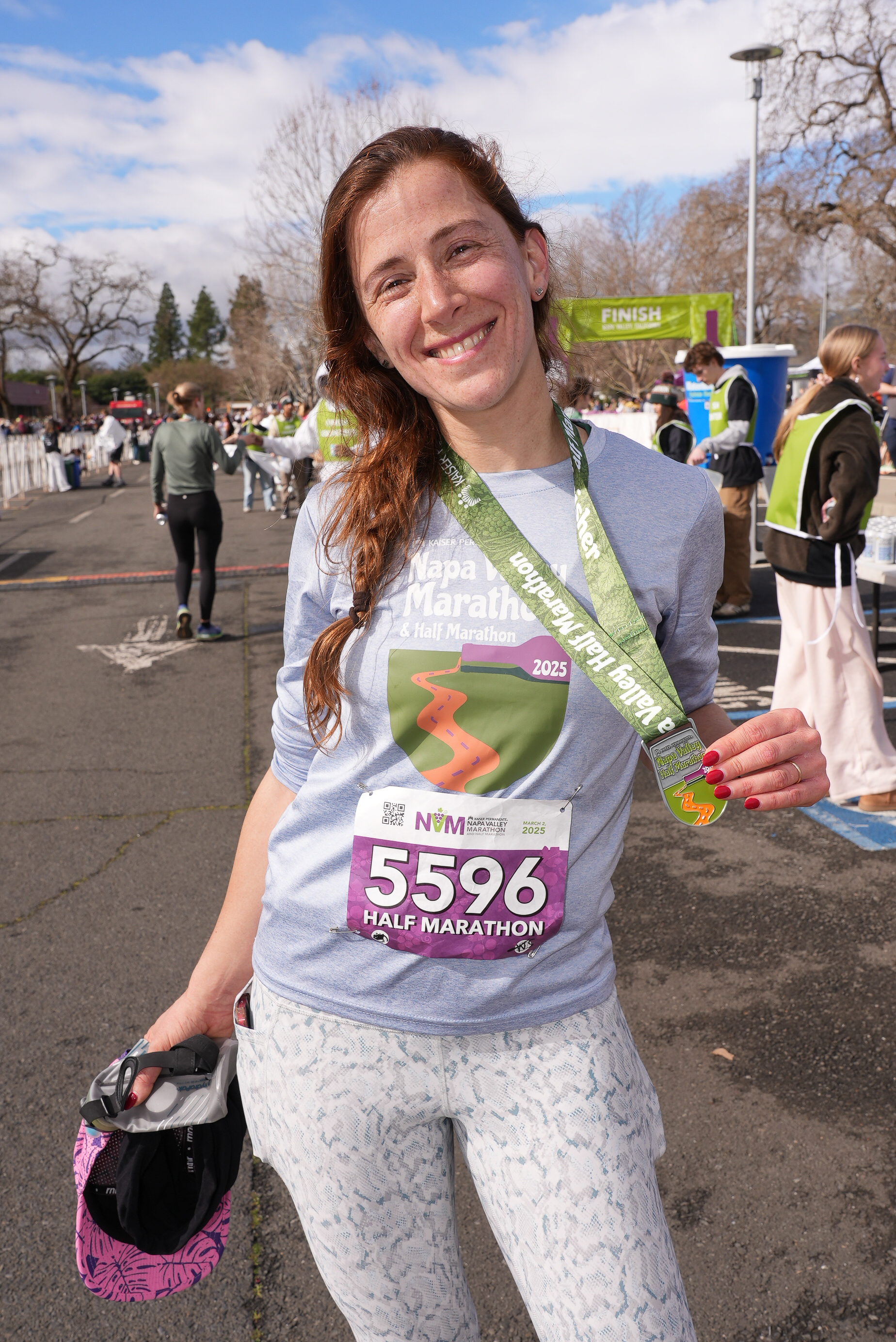
The gig was going pretty well until disaster struck … MY FLASH DIED.
Yeah, the cheap used flash you bought off of eBay has died. How unexpected.
I had issues with the flash before, but only realized how bad it was when it kept telling me to replace the batteries, even though I put a fresh pair in. At a certain point of fighting with this flash, I gave up and went straight natural light, instead.
So now my fight was against the sun.
I was able to position the runners so the sun was shining in front of them, to avoid being backlit. Pretty easy solution, but then came the next problem: shadows. As I mentioned before, the brighter the source light, the harsher the shadows, and with the Sun shining bright, the shadows were harsher than ever.
My experience with shadows is that it’s possible to save it thru editing, and going thru editing right now, I’m able to mitigate.
But there’s some stuff I can’t really get out of. The biggest issue was… hats.
Marathon runners wear hats and shades. Why? Anybody who goes outside hates when the sun is in your face and blinding you, especially runners who aim to be as comfortable as they can while running, so they wear hats.
Hats do what? Block the sun from your eyes. They also create large shadows when taking photos without flash.
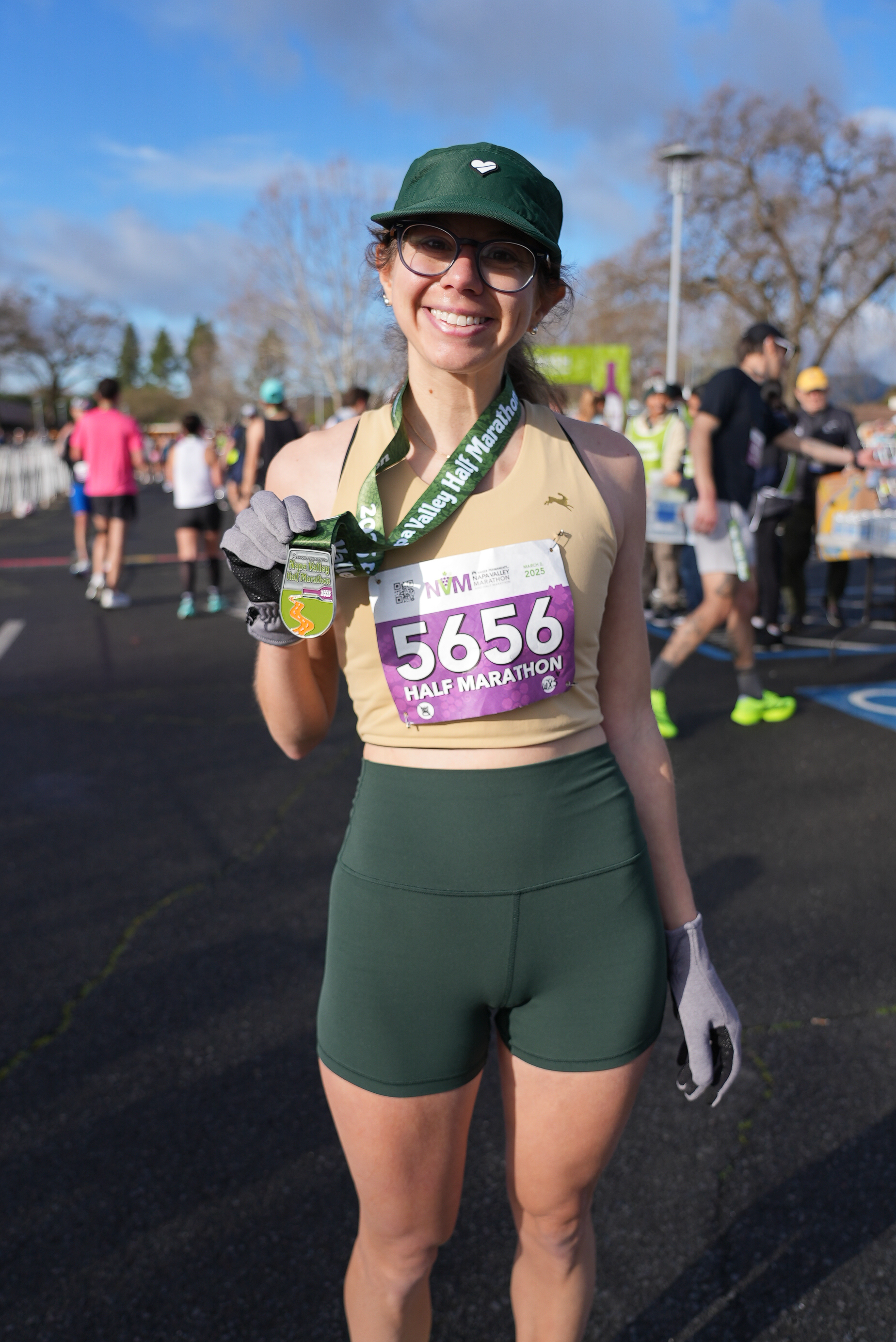
I ended up taking photos for about 4 or so hours, as each different wave came in at different times throughout the morning. It really was a marathon, and I even got tired myself taking photos.
Overall, I learned a lot. Another excellent opportunity to learn how to work with clients, work with people, work with lighting conditions, work in a fast paced environment, and the short time getting flash experience. My legs are a bit worn from standing around for a long period of time, but it was a worthwhile experience that I don’t mind doing again.
Also, it was my first time rocking a media vest and media pass. Pretty cool.


